


Articles for your dental health


Dental Bridges or Dental Implants: Which is Better?
A comprehensive comparison between dental bridges and dental implants for replacing missing teeth. Discover the differences, advantages, and disadvantages to ma
Share via:


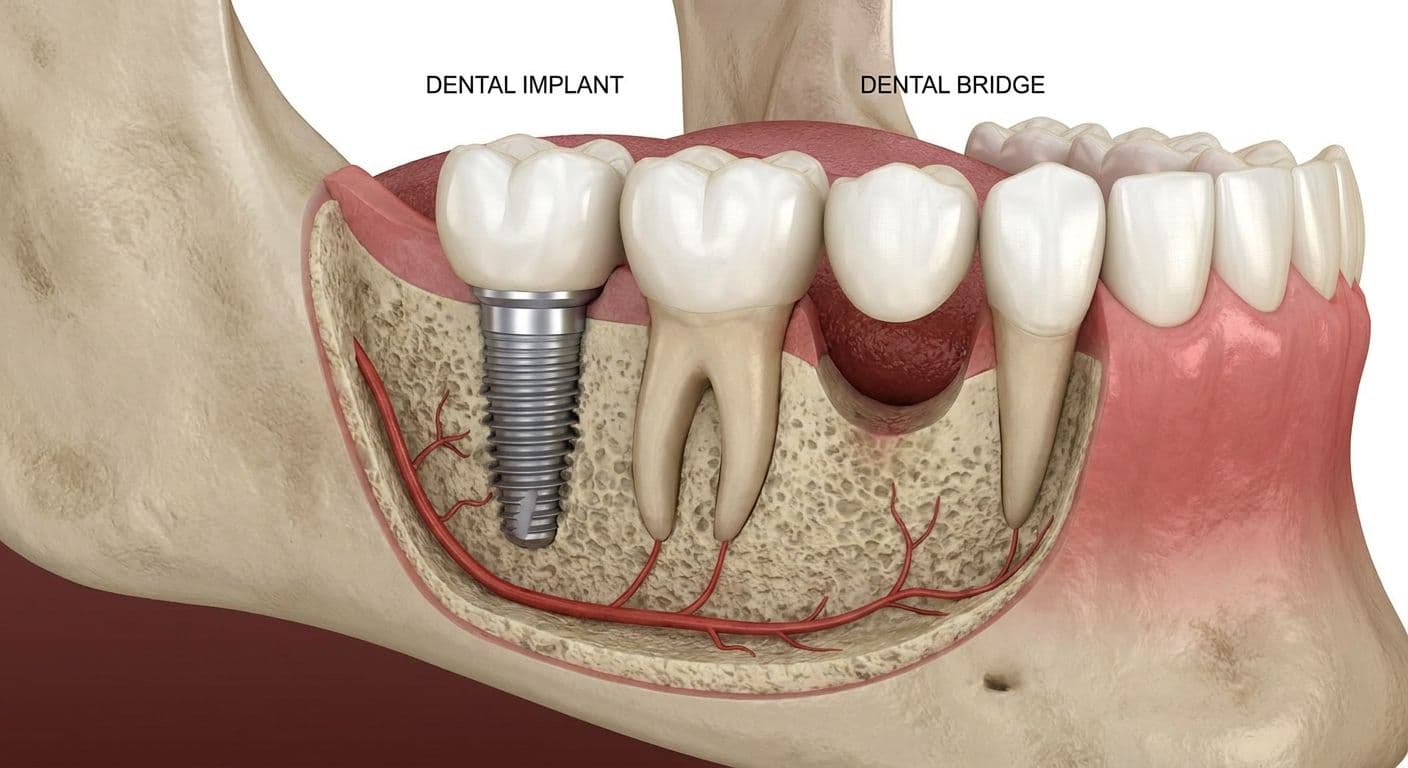

Dental Bridge vs. Dental Implant: Which is the Best Solution for Missing Teeth?
Missing teeth is a common problem that affects the appearance of your smile, your ability to chew, and even your overall oral health. Fortunately, there are effective solutions for replacing missing teeth, the most common of which are dental bridges and dental implants. But how do you choose between them? In this article, we will provide a comprehensive comparison between dental bridges vs. dental implants to help you make the most suitable decision for you.
What is a Dental Bridge?
A dental bridge is a fixed prosthetic device used to replace one or more missing teeth by connecting them to adjacent natural teeth (abutment teeth). A bridge typically consists of an artificial tooth (or several teeth) called a "pontic" and two crowns that are cemented onto the adjacent teeth after they have been prepared and reduced. These adjacent teeth are what support the bridge and provide its stability.
Advantages of a Dental Bridge:
- Relatively quick solution: Can be completed in two or three dental visits, making it an attractive option for those seeking quick results.
- Lower initial cost: Usually less expensive than dental implants initially, making it an economical option for some patients.
- Non-surgical procedure: Does not require major surgery like dental implants, which reduces surgical risks.
- Natural appearance: Can provide a good aesthetic appearance that blends with the surrounding natural teeth.
Disadvantages of a Dental Bridge:
- Requires preparation of adjacent teeth: Healthy adjacent teeth must be filed down to support the bridge, which may weaken them and make them more susceptible to decay or the need for root canal treatment in the long term.
- Does not preserve jawbone: Does not stimulate the jawbone, which can lead to bone loss in the missing area over time, potentially altering the facial structure.
- Shorter lifespan: Its lifespan ranges from 5 to 15 years, and it may need replacement, increasing long-term costs.
- Difficulty in cleaning: May be harder to clean than natural teeth, increasing the risk of decay in the supporting teeth and gum disease.
What are Dental Implants?
Dental implants are a surgical procedure in which a small titanium screw (the implant) is surgically placed into the jawbone to replace the root of a missing tooth. After a period of osseointegration (usually several months), an abutment and then an artificial crown are placed on top of the implant, functioning exactly like a natural tooth in terms of appearance and function.
Advantages of Dental Implants:
- Permanent and long-lasting solution: Dental implants can last a lifetime with good care, making them an excellent long-term investment.
- Preserves jawbone: Stimulates the jawbone and prevents its deterioration, which maintains facial structure and prevents the appearance of premature aging signs.
- Does not affect adjacent teeth: Does not require filing or modification of adjacent natural teeth, preserving their health and integrity.
- Natural look and feel: Provides an appearance and function very similar to natural teeth, giving the patient greater confidence in their smile and chewing ability.
- Easy to clean: Can be cleaned like natural teeth with brushing and flossing, making it easy to maintain oral hygiene.
Disadvantages of Dental Implants:
- Higher initial cost: Considered more expensive than dental bridges, but may be more cost-effective in the long run.
- Surgical procedure: Requires a surgical operation, and may not be suitable for everyone (such as patients with uncontrolled diabetes or heavy smokers) due to healing risks.
- Longer treatment time: The process takes several months for the bone to heal and the implant to fully integrate, requiring patience from the patient.
- Requires sufficient bone: Some patients may need additional procedures like bone grafting if they do not have enough jawbone to support the implant, which increases cost and time.
Comprehensive Comparison: Dental Bridge vs. Dental Implant
When comparing dental bridges vs. dental implants, several key points emerge that help in making a decision:
- Impact on adjacent teeth: A bridge requires the preparation of healthy teeth, while an implant does not affect them and preserves their structure.
- Jawbone health: Implants preserve the jawbone and prevent its deterioration, while bridges do not, which can lead to future problems.
- Lifespan: Implants last much longer, often a lifetime, compared to bridges which need replacement every 5-15 years.
- Cost: The initial cost of a bridge is lower, but the long-term cost of an implant may be less due to its durability and lack of frequent replacement.
- Treatment time: A bridge is quicker to complete, while an implant requires more time for healing and osseointegration.
- Procedure: A bridge is a relatively non-surgical procedure, while an implant requires surgery, which can be a decisive factor for some patients.
Factors to Consider When Choosing
The choice between dental bridges and dental implants depends on several personal factors that should be discussed with your dentist:
- General health: Some chronic health conditions or medications may preclude dental implant placement.
- Condition of adjacent teeth: If adjacent teeth already need crowns or are weak, a bridge might be a good option.
- Jawbone density: Implants require sufficient and strong bone, and bone grafting procedures may be necessary if this is not available.
- Budget: Initial cost plays a role, but long-term cost and maintenance should also be considered.
- Expectations and desired outcomes: Are you looking for a permanent solution or a quick fix? What level of comfort and appearance do you expect?
Conclusion
Ultimately, there is no single "best" solution for replacing missing teeth, but rather the "optimal" solution for your individual case. While a dental bridge offers a quick and initially less expensive solution, dental implants provide a permanent solution that preserves jawbone health and does not affect adjacent teeth. It is essential to consult a specialized dentist to evaluate your condition, discuss the available options, and help you make the best decision based on your health needs, financial situation, and expectations. Remember that investing in your oral health is an investment in your overall health and your smile.

Author
diva dent clinics
Related Posts
Longer Teeth? Causes and Treatment of Gum Recession
Read More
Jaw Pain and Clicking: A Patient's Guide to Understanding and Managing TMJ Disorders
Read More
Is Vaping Harmful to Your Teeth? Understanding the Hidden Effects of E-cigarettes on Your Oral Health
Read More
The Sun Vitamin: Impact of Vitamin D Deficiency on Your Teeth
Read More




Your first step towards a healthier smile
Book your appointment with the Diva Dent Clinics team and enjoy specialist care with a treatment plan tailored to your needs in a comfortable, refined setting.
- Specialist team
- Flexible appointments
- Personalized care