


Articles for your dental health


Root Canal Retreatment: Causes and Procedure Steps
Learn why pain returns after a root canal and how root canal retreatment can save your tooth and prevent extraction.
Share via:



Pain or discomfort in a previously treated tooth may return months or even years later, either because the tooth did not heal completely or developed a new bacterial infection. In this situation, the dentist determines whether the tooth requires root canal retreatment as a therapeutic option aimed at saving the tooth and preventing its extraction [1]. At Diva Dent Clinics, we pay special attention to our root canal treatment services, delivering precise care for infections and nerve pain using modern technologies that preserve the natural tooth and safely restore your comfort.
Key takeaways
- Pain in a previously treated tooth can recur for multiple reasons, such as untreated narrow or curved canals, saliva leakage through the restoration, or new dental decay [1].
- Pre-treatment evaluation includes clinical examination and advanced CT imaging to accurately identify the lesion's site and canal anatomy [2].
- The procedure involves reopening the tooth, removing the previous filling material, thoroughly disinfecting the canals, and resealing them hermetically [1].
- Selective retreatment may be performed if the infection is confined to a single root while the remaining roots remain sound [2].
- Placing an appropriate permanent restoration after treatment is vital to prevent future bacterial microleakage [1].
Causes of recurring pain in a previously treated tooth
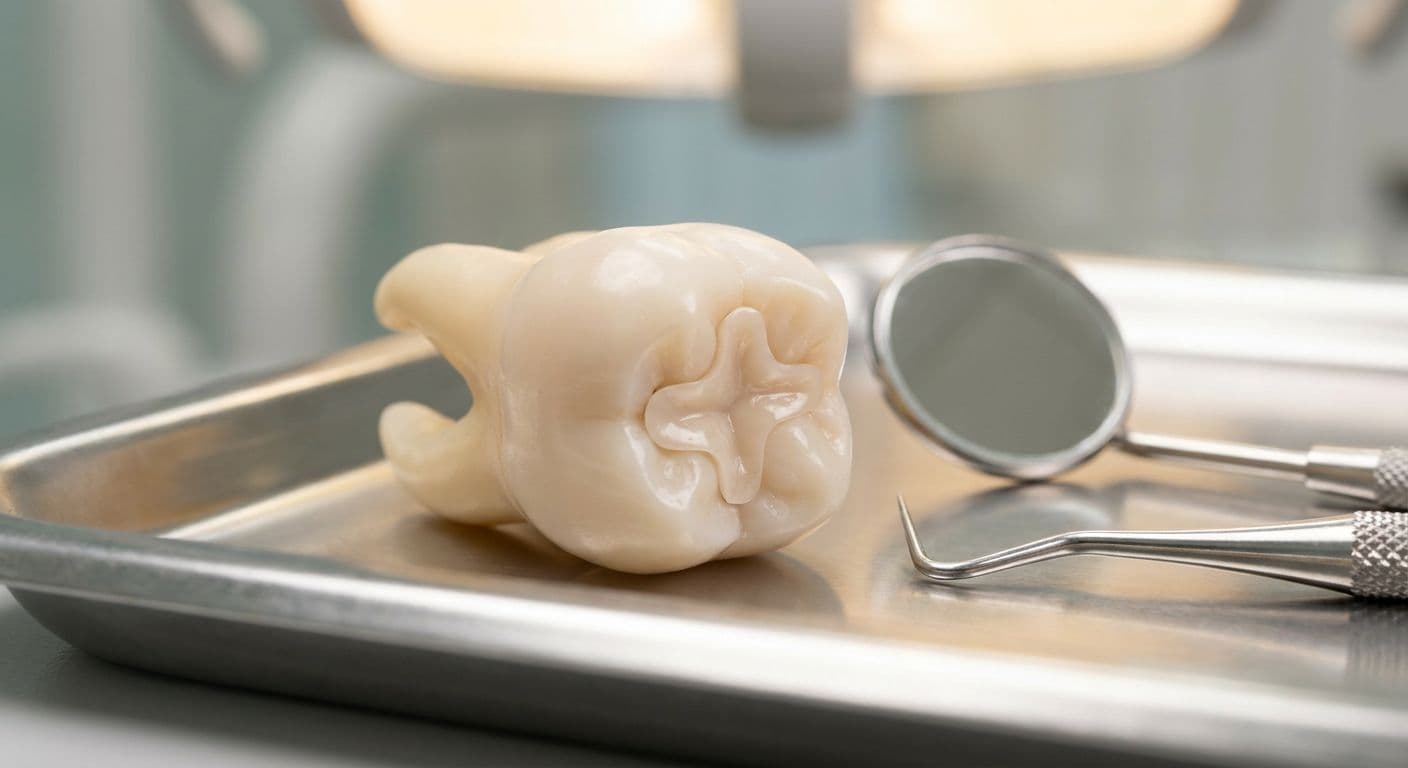
Scientific guidelines from the American Association of Endodontists emphasize that recurrent symptoms in a tooth do not necessarily indicate failure of the initial treatment, but are often linked to complex biological and anatomical factors [1]. Primary causes include narrow or curved root canals that were missed during the first procedure, or anatomical complexities within the roots that are difficult to detect without advanced magnification [1]. In addition, delays in placing a permanent crown or filling following a root canal, or an unsealed restoration that permits saliva infiltration, can allow bacteria to re-enter the canal system [1].
Furthermore, new complications may arise over time, such as secondary caries exposing filling materials to bacteria, a loose or fractured crown, or cracks within the tooth structure [1]. These issues produce persistent symptoms, including pain upon biting or pressure, localized swelling, and marked tenderness to percussion [1] [2].
Pre-procedure stage: Diagnosis and evaluation
The diagnostic phase requires an extensive clinical examination to establish the history of the pain and any accompanying symptoms [1]. The dentist evaluates the tooth's response to percussion and palpation while checking for any adjacent gum swelling [2]. Advanced diagnostic imaging, particularly cone-beam computed tomography (CBCT), is then utilized to determine the exact location and extent of the periapical lesion and assess the integrity of the other canals and their obturation [2].
Based on these radiographic findings, the endodontist determines whether the tooth requires complete retreatment of all root canals or selective retreatment limited solely to the compromised canal while preserving healthy, well-sealed roots [2]. For patients experiencing apprehension regarding lengthy dental visits, our guide on dental anesthesia and overcoming fear provides helpful information on available solutions for a calm and painless experience.
Root canal retreatment procedure steps
The procedure is performed through meticulous, sequential clinical steps:
- Accessing the root canals: Local anesthesia is administered, and the tooth is reopened to access the pulp chamber [1]. If a crown or post-and-core is present, it is carefully dismantled; ultrasonic instruments facilitate conservative removal while preserving healthy dentin [1] [2].
- Removing previous filling materials: The existing root filling (such as gutta-percha) is thoroughly removed from the canals using specialized rotary instruments and manual endodontic files [1] [2].
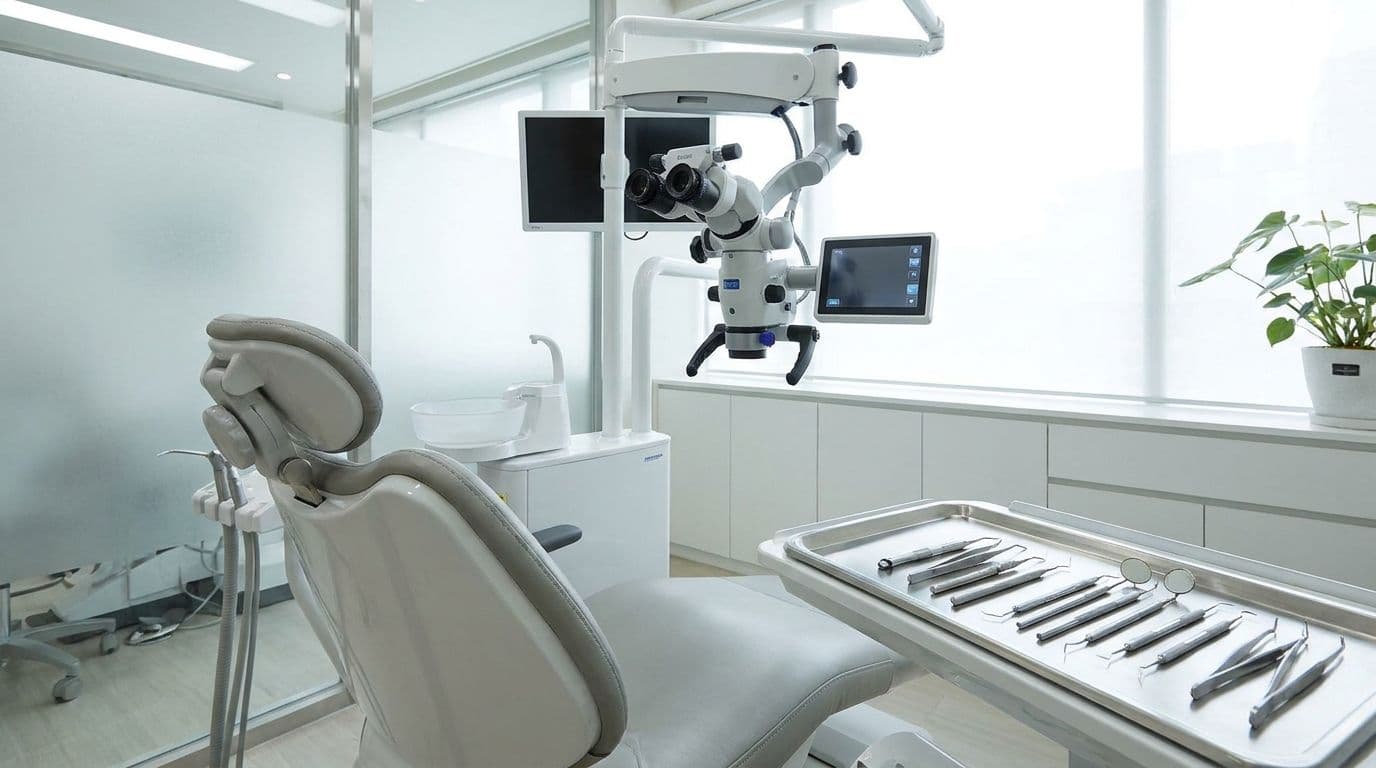
- Cleaning and disinfecting under magnification: The dentist utilizes a dental operating microscope (DOM) for magnified illumination, enabling detailed inspection of canal walls, detection of hidden canals, and retrieval of separated instruments if present [2]. Canals are mechanically shaped and irrigated to eliminate bacterial biofilms [1].
- Refilling and sealing the canals: Once the canals are thoroughly disinfected and dried, they are refilled with biocompatible materials that ensure a hermetic seal. Bioceramic sealers or Mineral Trioxide Aggregate (MTA) may be used to repair root perforations and block any future bacterial ingress [1] [2].
Post-procedure care and final restoration
Treatment is not complete with canal obturation alone; a temporary restoration is placed to safeguard the tooth until the next visit, or the tooth is immediately prepped for a definitive restoration to avoid coronal microleakage [1]. Depending on remaining tooth structure, the clinician determines whether the tooth requires a full-coverage crown or bonded restorations such as dental inlays and onlays to restore long-term function and natural aesthetics.
Follow-up care includes periodic radiographic evaluations to verify periapical bone healing and complete resolution of symptoms [2]. In complex situations where the root apex cannot be thoroughly cleaned through coronal access, endodontic microsurgery, such as an apicoectomy, may be recommended to treat persistent apical infection while preserving the natural tooth [1].
Frequently asked questions
Does recurring pain after a root canal mean the tooth must be extracted?
Recurrent pain does not mean extraction is inevitable; modern clinical standards recommend endodontic retreatment or microsurgery as the first-line approach to resolve infection and preserve the tooth whenever it is structurally restorable [1].
What is selective root canal retreatment?
Selective retreatment is a conservative technique focused on reopening and cleaning only the canal showing periapical disease, leaving intact, well-treated canals untouched based on high-resolution CBCT imaging [2].
When is endodontic surgery indicated over conventional retreatment?
Endodontic surgery (such as an apicoectomy) is indicated when coronal access to the apical infection is obstructed by unremovable posts, or when periapical pathology persists despite thorough orthograde retreatment [1].
If you are experiencing persistent pain or discomfort in a previously treated tooth, the team at Diva Dent Clinics is here to evaluate your condition using advanced diagnostic tools and develop a targeted care plan; book your appointment today to restore your oral health and smile with confidence.
Sources
This article is for general health education and does not replace an examination and consultation with a dentist.

Author
Dr. Abdullah Al-Qahtani





Your first step towards a healthier smile
Book your appointment with the Diva Dent Clinics team and enjoy specialist care with a treatment plan tailored to your needs in a comfortable, refined setting.
- Specialist team
- Flexible appointments
- Personalized care