

Articles for your dental health


Zirconia vs Emax Crowns: Which Is Better?
Discover the differences between zirconia and E-max crowns in strength and aesthetics to choose the best option for your smile.
Share via:


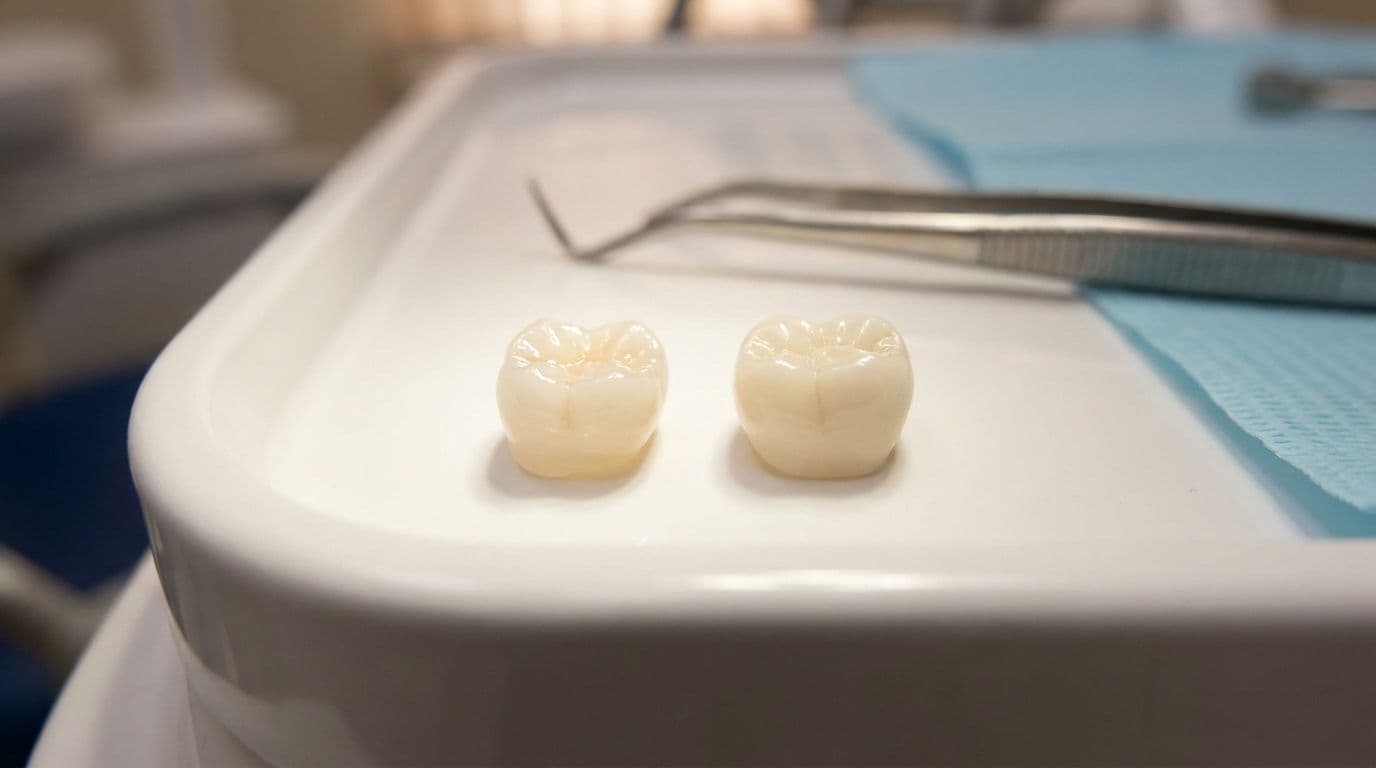

Comparing zirconia vs emax crowns comes down to balancing mechanical strength with aesthetic translucency; zirconia excels in hardness and fracture resistance for posterior molars and bridges, while E-max excels in mimicking the natural look and translucency of front teeth [2], [3]. At Diva Dent Clinics, we provide precision-crafted crowns and veneers designed to restore tooth form and function with natural, comfortable results harmonized with your smile, with the choice depending on tooth location, bite forces, and individual aesthetic needs [2].
Key takeaways
- Zirconia crowns feature exceptional hardness and high resistance to chewing forces in posterior teeth and bridges [2], [3].
- E-max crowns offer superior optical translucency, making them the preferred choice for enhancing single anterior teeth [2].
- Research shows that the fracture load and durability of zirconia significantly exceed those of lithium disilicate crowns [3].
- Ceramic crowns generally last between 5 and 15 to 20 years with consistent daily oral hygiene [1].
- Patients with teeth grinding require careful assessment and a night guard to protect restorations from damage [1], [2].
What are zirconia crowns and E-max crowns?
Zirconia crowns are made from zirconium dioxide, a polycrystalline ceramic material known for exceptional mechanical resistance against fractures [2], [3]. This material is used either as a digitally milled solid monolithic block or as a core layered with an outer porcelain veneer [2].
E-max crowns are composed of glass ceramic derived from lithium disilicate [2]. This material features high light transmission similar to natural dental enamel, giving restorations vitality without appearing opaque [2]. This material is also used for cosmetic veneers, as discussed in Dental Veneers or Bonding: The Ideal Hollywood Smile?, or to restore missing tooth structure through Dental Inlays and Onlays for Tooth Restoration.
Zirconia vs Emax crowns: What is the difference in strength and aesthetics?
The clearest contrast between the two materials emerges when evaluating durability and optical characteristics; laboratory studies demonstrate that zirconia can withstand fracture loads exceeding 2000 N in bridges, noticeably outperforming glass ceramics [3]. Conversely, E-max offers superior shade blending due to its translucency, whereas traditional zirconia is known to be more opaque, though newer formulations have significantly enhanced its aesthetic qualities [2].
| Comparison point | Zirconia crown | E-max crown | | :--- | :--- | :--- | | Core material | Polycrystalline zirconium dioxide [2] | Lithium disilicate glass ceramic [2] | | Strength and fracture resistance | Exceptional, withstanding fracture loads exceeding 2000 N [3] | Very good, but lower than zirconia [3] | | Translucency and appearance | Higher opacity, with improvements in recent generations [2] | Exceptional translucency mimicking natural enamel [2] | | Common clinical use | Molars, bridges, and high-stress areas [2] | Front teeth and single premolars [2] |
Which is better for your teeth: anterior or posterior?
To determine the ideal solution for each patient, dentists evaluate functional criteria based on tooth location and occlusal demands:
- Anterior teeth: E-max is the primary choice for crowning the front six teeth (in the upper or lower jaw) due to its excellent shade matching with adjacent natural teeth [2].
- Premolars: E-max functions reliably in premolars, while zirconia can also be used successfully if biting forces are exceptionally high [2].
- Posterior molars: Monolithic zirconia is preferred over E-max for molars (especially second molars and lower first molars) because of heavy grinding forces requiring a crack-resistant material [2].
- Dental bridges (replacing missing teeth): 3-unit posterior bridges are restricted to zirconia with connector areas of at least 4 mm, and multi-unit posterior E-max bridges are not recommended due to fracture risk [2].
- Bruxism (teeth grinding): Patients who grind their teeth or have a heavy bite require specialized planning and parallel preparation to minimize failure rates, alongside wearing a night guard and selecting high-strength materials [1], [2].
Placement steps and caring for crowns to ensure longevity
Placing a dental crown typically requires two clinical visits [1]. During the first visit, the tooth and surrounding tissues are numbed, decay or failing fillings are removed, the tooth is reshaped to receive the restoration, digital or conventional impressions are captured, and a temporary crown is placed [1]. At the second visit, the temporary crown is removed, and the permanent crown is checked for precise fit and margin adaptation via clinical inspection or X-rays before being permanently cemented [1].
While dental crowns themselves cannot decay, the natural tooth underneath remains vulnerable to cavities [1]. Proper crown maintenance includes brushing twice daily, flossing once daily, and avoiding chewing ice cubes or hard foods that could chip the ceramic [1]. Most dental crowns last at least 5 years and can endure between 15 and 20 years with diligent oral hygiene and regular dental checkups [1].
Frequently asked questions
How long do zirconia and E-max crowns last?
Most ceramic crowns last at least 5 years and can easily reach 15 to 20 years when patients maintain good oral hygiene and attend regular checkups [1].
Can an E-max or zirconia crown crack?
Yes, ceramic crowns can chip or fracture, especially in individuals who grind their teeth or bite down on extremely hard objects, which makes wearing a night guard essential [1].
Can E-max be used for posterior dental bridges?
E-max is not recommended for multi-unit posterior dental bridges due to heavy chewing loads, making zirconia the safer and more suitable choice for bridges [2].
At Diva Dent Clinics, we thoroughly evaluate your oral health to help you choose the right restoration for your smile and bite; book your appointment today to begin your treatment plan.
Sources
- Dental crowns
- ZIRCONIA VS. LITHIUM DISILICATE
- Lithium Disilicate Porcelain Is Weaker Than Zirconia When Comparing Fracture Toughness Of Dental Crowns
This article is for general health education and does not replace an examination and consultation with a dentist.

Author
Dr. Hazem Al-Sabbagh





Your first step towards a healthier smile
Book your appointment with the Diva Dent Clinics team and enjoy specialist care with a treatment plan tailored to your needs in a comfortable, refined setting.
- Specialist team
- Flexible appointments
- Personalized care