

Articles for your dental health


Your Comprehensive Guide to Hidden Lingual Braces
Learn everything about hidden lingual braces behind the teeth; their pros and cons, and how they offer a great smile without visible brackets using advanced car
Share via:



Right Behind Your Teeth: Your Comprehensive Guide to Lingual Braces
Many people today are looking for a harmonious and attractive smile without having to display traditional metal brackets, which can pose a social or professional obstacle causing embarrassment for some adults. In this context, internal orthodontic technology, medically known as lingual braces, emerges as an ideal solution combining the high therapeutic efficiency of fixed braces with a completely hidden aesthetic appearance. If you are looking to straighten your teeth without anyone noticing, this detailed guide provides everything you need to know about this advanced option.
What Are Lingual Braces and How Do They Work?
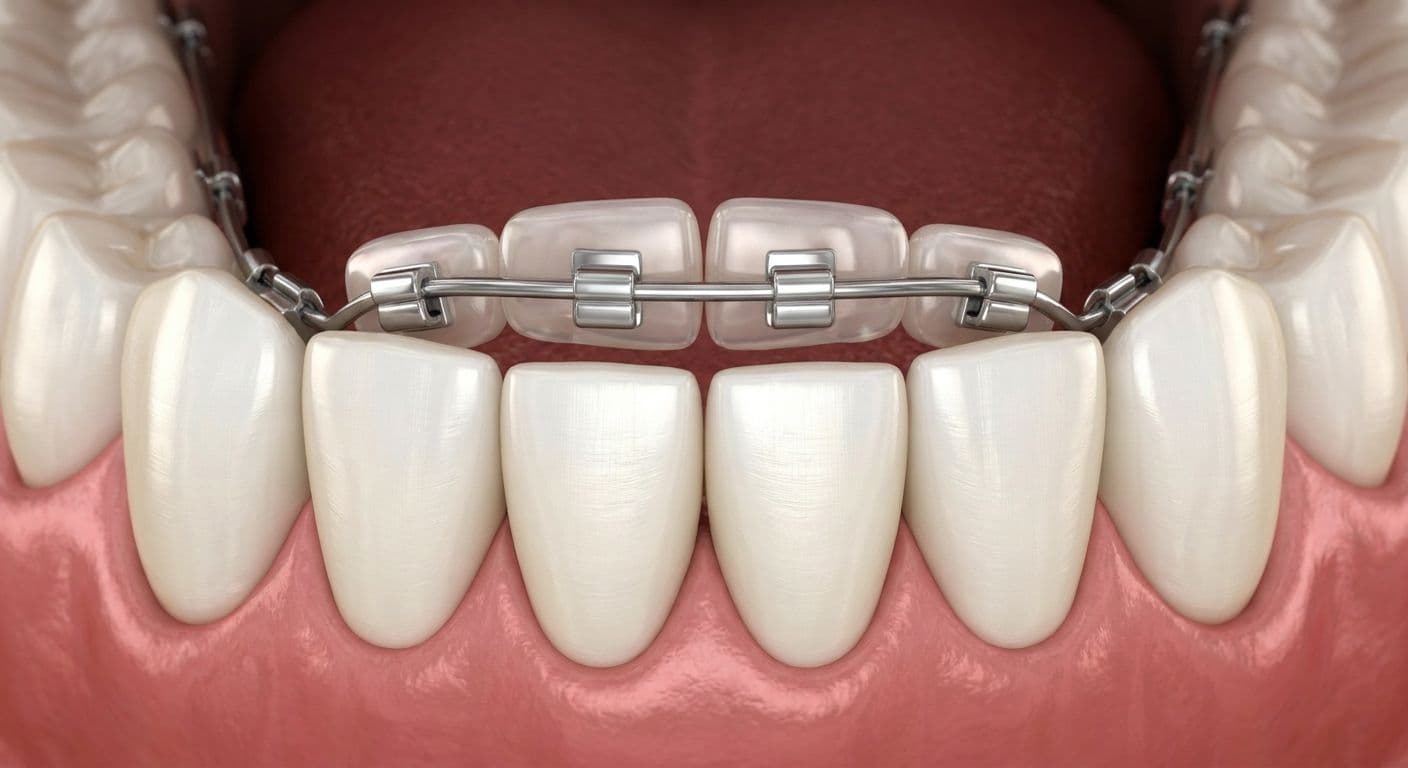
Lingual braces are a unique medical innovation within the fixed orthodontic family. The fundamental difference between them and traditional braces lies in their placement: the metal brackets and wires are attached to the inner surface of the teeth (facing the tongue) rather than the visible outer surface.
These appliances are custom-made for each patient after taking highly accurate 3D digital impressions of the teeth. Thanks to this precise customization, the brackets conform seamlessly to the intricate contours of the inner surfaces, applying calculated forces that gradually guide the teeth into their proper positions according to a predetermined treatment plan set by the orthodontist.
Advantages of Choosing Lingual Braces
Lingual braces offer a wide range of benefits that make them an attractive choice, most notably:
- Completely Invisible: The braces remain hidden behind your teeth, allowing you to smile and speak with absolute confidence without any change to your external appearance.
- Fully Customized Design: The brackets are custom-fitted to ensure maximum comfort and a perfect match with your unique oral anatomy.
- Ability to Treat Complex Cases: They possess efficiency comparable to traditional braces, successfully correcting severe malocclusions, closing wide gaps, and rotating teeth with an effectiveness that removable clear aligners cannot always provide.
- Protection of the Outer Enamel Surface: If minor lapses in oral hygiene occur, any staining or plaque accumulation remains on the back of the teeth and will not affect the aesthetic front surface.
Challenges You May Face with Lingual Braces
Despite the remarkable aesthetic benefits, there are some aspects and challenges to consider:
- Initial Speech Difficulties: Because the brackets occupy space close to the tongue, you may experience a slight lisp or difficulty pronouncing certain letters. However, this effect is temporary and typically resolves within two to three weeks as the tongue adapts.
- Temporary Tongue Irritation: The tongue's contact with the metal parts can cause minor irritation during the first few days, which can be easily managed using orthodontic wax.
- Need for Meticulous Hygiene: Cleaning the back surfaces requires extra time and effort to prevent food debris from accumulating.
- Financial Cost: Lingual braces require advanced technical expertise and specialized digital dental laboratories, making their overall cost higher compared to traditional options.
Who Is the Ideal Candidate for This Technique?
This type of braces is suitable for most adults and adolescents whose permanent teeth have fully erupted, especially:
- Professionals and individuals working in fields requiring constant public visibility and communication, such as teachers, public speakers, broadcasters, and business executives.
- Athletes who engage in contact sports, as internal braces reduce the risk of lip or cheek injuries during sudden impacts.
- Individuals seeking precise results while keeping their orthodontic treatment entirely discreet.
Tips for Oral Hygiene Care During Treatment
To maintain optimal oral health and prevent gum inflammation during treatment, be sure to:
- Brush your teeth regularly with a soft-bristled toothbrush after every meal.
- Rely on a water flosser to remove fine debris trapped between the brackets.
- Use an interdental brush to reach narrow, hard-to-clean spaces.
- Commit to scheduled follow-up appointments at the orthodontic clinic to monitor progress and adjust the wires.
Conclusion
Lingual braces represent a true revolution that merges discreet treatment with high efficiency in smile correction. If you wish to improve your dental alignment without compromising your daily confidence, consulting a qualified orthodontist is the first step toward determining if this treatment is right for you and beginning your journey toward your dream hidden smile.

Author
diva dent clinics







Your first step towards a healthier smile
Book your appointment with the Diva Dent Clinics team and enjoy specialist care with a treatment plan tailored to your needs in a comfortable, refined setting.
- Specialist team
- Flexible appointments
- Personalized care